
Table of Contents
Introduction
It is a common misconception that HE machines are terrible for cloth diapering because they use less water than traditional standard machines. This is absolutely not true. When used correctly (as they were intended to be used) they can be great at cleaning cloth diapers. Here at Fluff Love & CD Science, we love our HE machines. We especially love the savings of precious resources such as water and electricity, and the money saved on the water and utility bills. Do keep in mind that in a HE washer your cycle times will be longer; this is what allows them to effectively clean using less water and electricity. There’s really no way to speed up your wash routine when washing in a HE machine. Many of our members find ways to work their longer wash cycle times into their lives, such as starting their main wash before they go to bed at night and then drying everything in the morning.
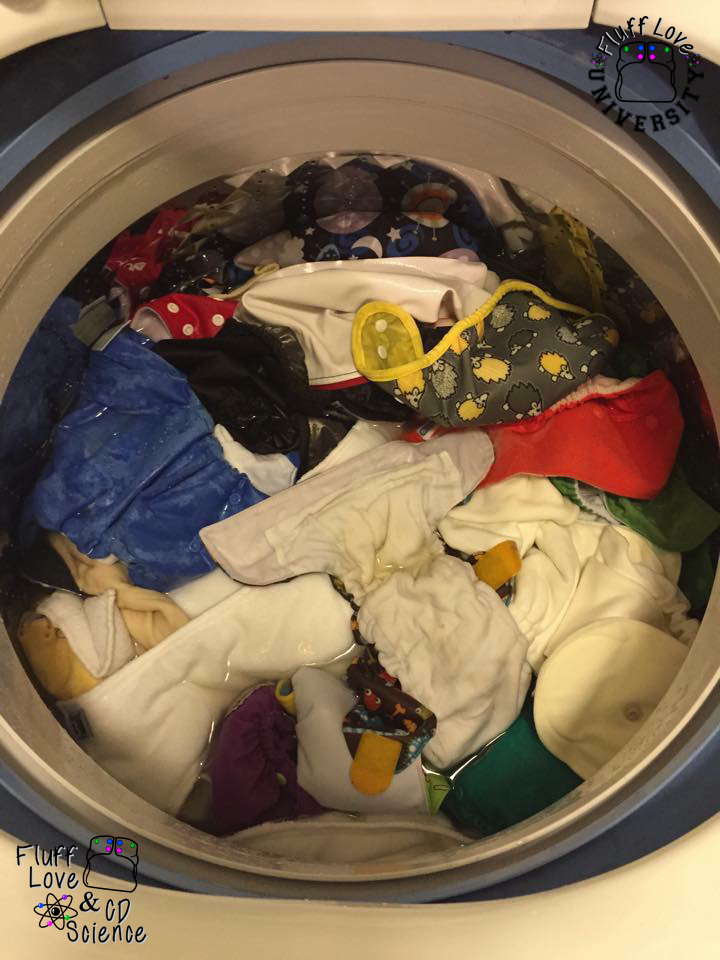
Because many HE washers do not have agitators, they rely on the clothing rubbing together in the wash to scrub things clean. This is why it is so important to make sure that your HE washer is filled with enough laundry. Once you have filled the washer the proper amount by adding smaller-sized items such as baby clothes or hand towels in with your diapers to complete the load, try not to analyze the wash action of your machine. It will look different during different stages of the wash cycle, depending on whether it is balancing or weighing (not all HE machines weigh the laundry, but some do), agitating, rinsing, spinning, etc. HE front loaders and top load machines that tumble on a horizontal axis universally need to be 2/3-3/4 full of laundry to achieve proper agitation for the main wash cycle. Keep in mind that we treat all front load/horizontal axis machines as high efficiency and recommend HE detergent, even when the machine predates the HE logo and labeling, and in countries that do not utilize HE labeling. Many HE top loaders do best at half full, although there are a few that do best 2/3-3/4 or even greater than 3/4 full of laundry. We recommend that you look up your specific washer in our washing machine index or post in our Facebook group for specific help about how to properly load your washing machine with laundry for optimal agitation. Be sure to have a picture of your control panel and model number handy!
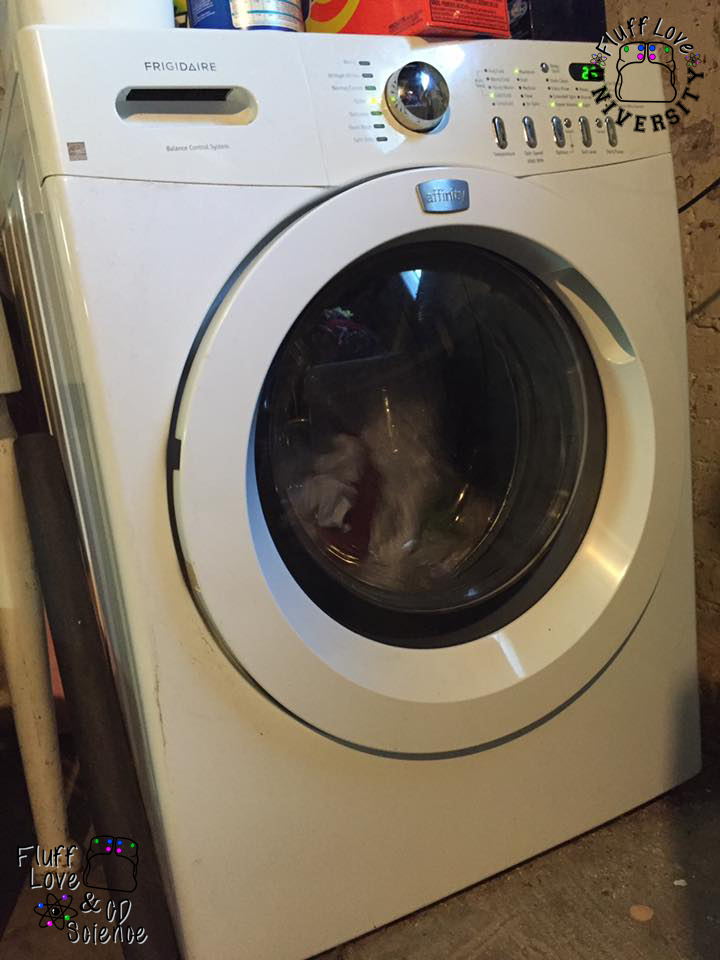
Example of a front loading HE machine. All front loading machines are treated as HE machines whether they explicitly state HE or not.
HE Myths
There are many myths and methods floating around on the internet that recommend “tricking” your washer to add more water, adding wet towels, or reducing spin speed to get the washer to use more water. Generally, your HE washer will drain off the excess water and you won’t achieve cleaner diapers through these “tricks,” and some of them can prevent your washer from cleaning your diapers. You can also void your washer’s warranty and potentially damage your machine. We do not recommend tricking your washer to add more water, ever. Not only would we not encourage methods that would potentially damage your washer, it’s just not necessary to get clean diapers. Some of these tricks can reduce agitation, and prevent proper cleaning, or involve adding bulky items like towels that can wrap around your diapers and keep them moving freely and agitating. We recommend using your washing machine as it was designed to be used.
HE Detergent
You must use a true HE safe, low-sudsing detergent in your high-efficiency washer. These detergents are formulated to create fewer suds while maintaining cleaning power. Because HE washers use less water, they need a lower-sudsing detergent that can rinse away with less water and to keep excess suds from overwhelming and possibly breaking the pump on the machine HE washers are cleaning the same amount of dirty laundry, so they need the same amount of detergent (or in the case of high-capacity HE machines, maybe even more!)
Many detergent companies are moving toward labeling that says “safe for all machines, including HE.” As long as the detergent does not direct you to use less in a HE machine, it is probably fine for your HE machine. The exception is the “safe for all machines” Gain powder, which is very sudsy and has broken HE machines. As of this writing (July 2016), the problem with Gain’s powder formula has not been corrected and we do not recommend that it be used at all in HE washers. Please take a look at our detergent index to see our recommended amounts for many detergents, and make sure to double (and triple!) check that your detergent bottle or box is labeled as HE safe, as some brands do have separate formulas for HE and non-HE.
HE Wash Routines
Now that you know a bit more about how your HE machine works, let’s talk about what your wash routine is going to look like. We recommend a two cycle wash routine, and the majority of HE machines are no different. We recommend a “prewash” cycle that removes the bulk of the soil, and then a “main wash” cycle that deep cleans multilayered diaper materials so they are completely clean out of the wash every single time. Be sure to look up your washer in the washing machine index to check the recommended cycles for your specific washer. The recommended cycles listed there are based on analysis of each machine’s owner’s manual and our experiences troubleshooting in our Facebook group. Here is a general guide for how to pick a starting point for your wash routine. **NOTE: If you own a Kenmore Oasis, Whirlpool Calypso, Whirlpool Cabrio, Maytag Bravos, or Maytag Centennial HE please see our page for these specific machines.
PREWASH: for front loaders and horizontal axis machines, choose “speed wash,” “quick wash,” or “express wash.” You want a shorter cycle that is at least 30-45 minutes long to remove the surface soil so the main wash can be done with clean water. In the absence of a “speed” cycle, use the shortest normal cycle. Many HE top loaders need a “normal” or “cottons” cycle for the prewash because heavy soiled diapers do not agitate as easily without the tumbling action of a front loader. Always choose the highest soil and spin that you can select for the cycle, and turn off any extra rinses or prewash buttons that may come on. Generally speaking, for your prewash we recommend adding a small amount of detergent and water softener if your water hardness calls for it. Your prewash can be just dirty diapers.
MAIN WASH: Your main wash cycle is the cycle that deep cleans the diapers, getting to all of the layers of the fabric. Before starting your main wash cycle, be sure to open up the washer, peel everything off the drum and fluff it up. Add other smaller laundry until the washer is 2/3-3/4 full of laundry for front loaders and horizontal axis machines. For HE top loading machines be sure to check the washing machine index for the optimal loading level for your specific machine. Avoid adding anything larger than a flat or a receiving blanket, as large items can wrap around the diapers and prevent agitation.
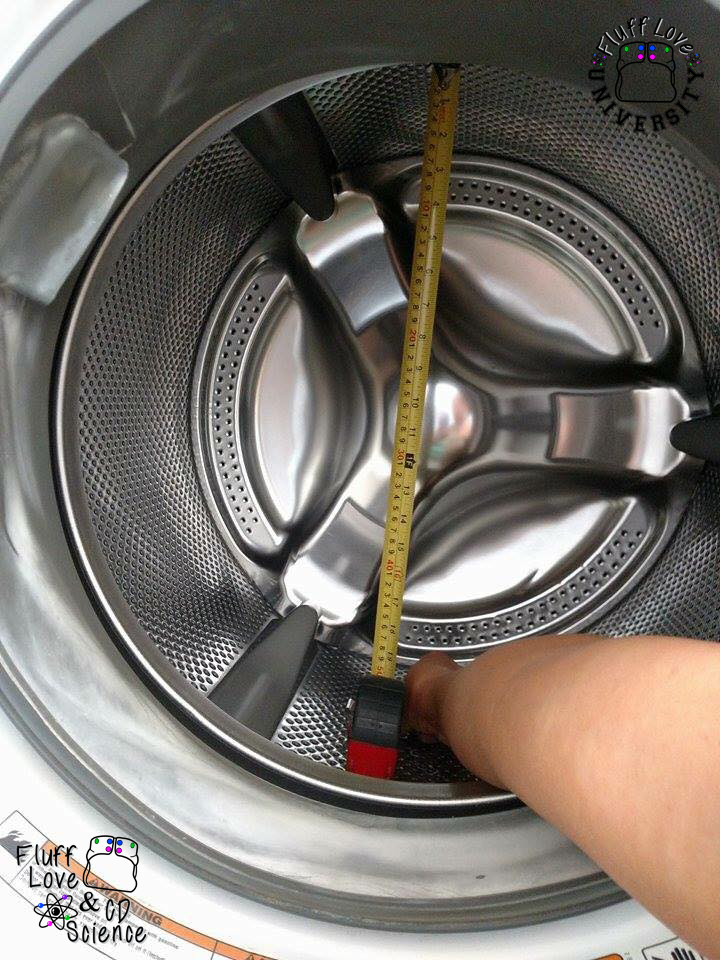
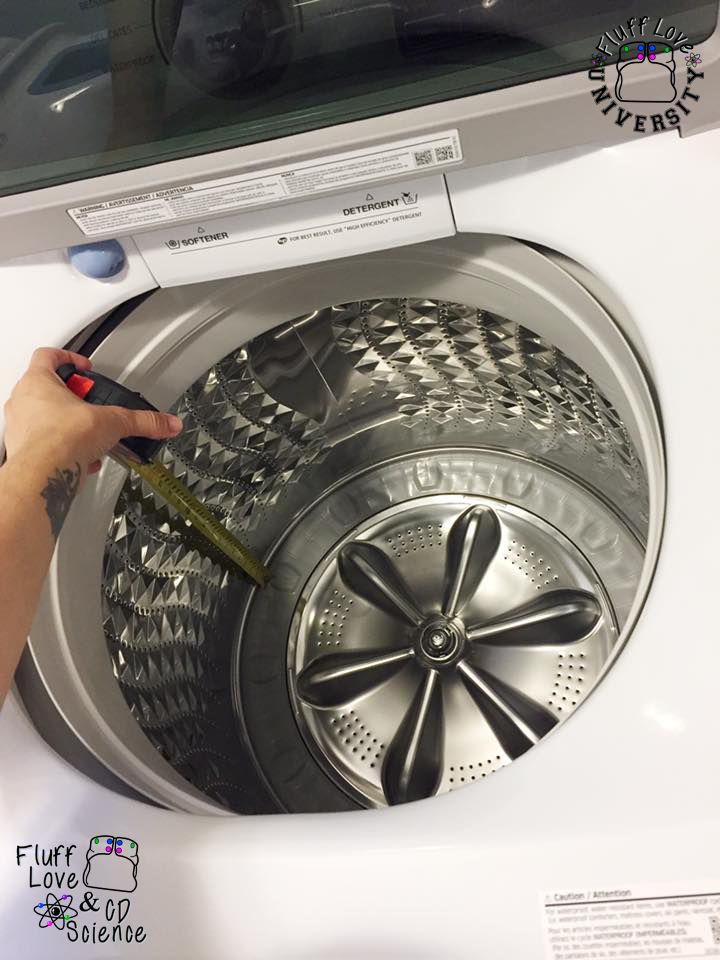
Example of how to measure the drum of an HE front loading machine (top) and an HE top loading machine (bottom).
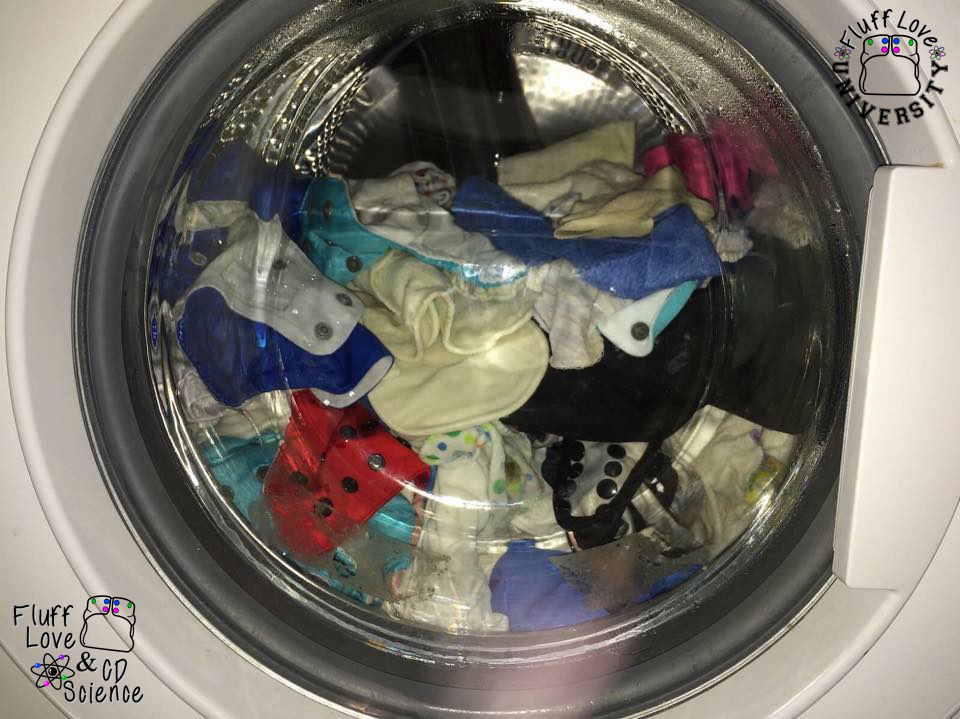
Example of an HE front loader at it’s minimum 2/3 full (top) and a Samsung HE top loader at it’s minimum 3/4 full (bottom).
You want to choose your washer’s longest cycle with the strongest agitation. “Heavy duty,” “whites,” and “power wash” are the most commonly recommended options. In the absence of a heavy duty or intensive cycle, choose the longest “normal” or “cottons” cycle. Some “whites” cycles add an extra rinse that cannot be turned off, so be sure to consult your owner’s manual or the washing machine index. Some machines also offer a “cottons/towels” cycle. This should be avoided as it is most similar to a “bulky” or “sheets” cycle, which means a lot of water and not a lot of agitation. Always choose the highest soil and spin, and turn off any automatically selected extra rinse and prewash settings. If you have a stain treatment or other “boost” button, you may want to select it, again as long as it doesn’t add extra rinses. Usually, the stain treatment option adds a short soak and some extra agitation, which is beneficial. For your main wash, add the recommended full amount of detergent, and water softener if your water hardness calls for it.
SOME CYCLES THAT WE DO NOT RECOMMEND:
For your prewash, we do not recommend rinse/spin or the prewash button. These cycles generally do not provide sufficient agitation to adequately clean the surface soil from your diapers. The prewash button seems like an attractive “one touch” solution, but since we recommend adding main wash detergent separately, and fluffing/bulking the load to the proper load size between the prewash and the main wash, the “prewash” button is just not a good option for your prewash.
For your main wash, we do not recommend the sanitary cycle, allergienne cycle, delicates cycle, baby wear cycle, bulky items or towels, or any cycle that adds extra rinses or super-heats the water. Extra rinses waste water at best, and at worst can deposit minerals from hard water into your clean diapers. Please see our file on washing in hard water for more information about the impact of hard water minerals on your cloth diapers. Using water hotter than 60C (such as a sanitary cycle or a 90C or 95C cycle) can shorten the useful life of your diapers. The high temperatures can lead to prematurely wearing out fabrics, elastics and snaps, or cause cotton fabrics to fade. With proper detergent and agitation, bacteria is removed every wash and there should not be a need for the sanitize cycle. However, using the sanitize cycle as an alternative to bleach for sanitizing purposes is acceptable as it is rarely, if ever, needed.